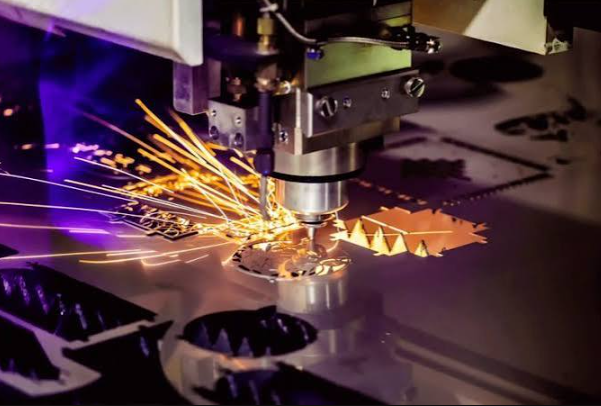
Improving Production Efficiency Through the Right Laser Technology
Manufacturers continually look for ways to improve output, reduce rework, and maintain consistent product quality. Equipment selection plays an important role in these efforts, but the best results usually come from evaluating the complete production process rather than focusing on machine speed alone.
Laser technology can support several manufacturing activities, including cutting, welding, and marking. When the process is suited to the application, it may help manufacturers achieve accurate results and improve workflow. Choosing an appropriate system, however, requires a detailed assessment of production needs.
Look at the Entire Workflow
Before introducing new equipment, manufacturers should map the steps involved in producing a typical component. This includes material preparation, loading, processing, inspection, finishing, and transfer to the next stage.
A bottleneck may occur before or after the actual laser operation. For example, a faster cutting process will not significantly increase overall output if operators spend most of their time repositioning material or waiting for inspection.
Reviewing the workflow helps identify where new equipment can provide the greatest benefit. It also provides a baseline for measuring improvements after installation.
Match the Process to the Material
Laser systems vary in their capabilities. The appropriate machine depends on the material type, thickness, geometry, desired finish, and production volume.
Cutting, welding, and marking have different technical requirements. A system optimized for one application may not deliver suitable results for another.
Manufacturers researching industrial laser solutions should compare the intended application with the equipment’s verified specifications. Supplier demonstrations and material trials can help determine whether the proposed system can meet the required standards.
Testing is particularly important when a product contains several materials or when the finished component must meet tight dimensional tolerances.
Reduce Rework Through Process Control
Rework can consume labor, materials, and machine time. Inconsistent processing parameters, poor material preparation, incorrect positioning, and inadequate maintenance may contribute to quality problems.
A controlled production procedure defines the settings, preparation steps, inspection points, and acceptance criteria needed for consistent results.
Operators should document relevant process parameters and report deviations. If a defect appears repeatedly, the team should investigate its cause rather than repeatedly correcting individual parts without changing the underlying process.
Regular review of rejected components can reveal patterns that point to equipment, material, or training issues.
Evaluate Automation Opportunities
Automation can reduce repetitive handling and improve consistency, particularly in high-volume production. Depending on the application, a laser system may be integrated with robotic loading, conveyors, positioning equipment, sensors, or production software.
Before adding automation, manufacturers should confirm that the workpiece can be presented consistently and that the system can accommodate product variations.
Integration planning should cover communication between machines, operator access, protective interlocks, emergency stops, and maintenance requirements. The automated process should also have a clear method for identifying and handling defective parts.
Plan for Equipment Reliability
Unexpected downtime can affect production schedules and delivery commitments. A maintenance plan helps reduce the risk of avoidable equipment failures.
Manufacturers should follow the supplier’s instructions for inspection, cleaning, cooling systems, consumable replacement, and service intervals. Operators should be trained to recognize abnormal behavior and report faults promptly.
Spare-part availability and technical support should be considered during procurement, especially when the equipment is essential to the production line.
Maintenance records can help identify recurring problems and support more effective scheduling.
Train Staff for Consistent Results
Even advanced equipment depends on people who understand its operation. Training should cover machine controls, approved settings, material handling, quality checks, and safety requirements.
New operators should be assessed before working independently on critical components. When procedures change, the team should receive updated instructions.
A clear division of responsibilities also helps ensure that machine operation, maintenance, and quality approval are handled by appropriately trained personnel.
Measure Efficiency With Meaningful Data
Manufacturers should establish measurable performance indicators before implementing new technology. Useful measures may include cycle time, first-pass acceptance rate, material waste, machine availability, and total labor required per completed component.
Results should be compared with the original baseline and interpreted in the context of product quality. Faster production is not a meaningful improvement if it creates more defects or increases downstream work.
Periodic reviews help the team decide whether process settings, material handling, or maintenance procedures need adjustment.
Consider the Financial Impact
The cost of a laser system includes purchase, installation, training, consumables, electricity, maintenance, and potential production downtime during implementation.
Potential benefits may include reduced rework, more consistent processing, or improved throughput. These should be estimated using realistic production data rather than general marketing claims.
A trial run can provide evidence of the likely impact and reveal additional costs before the business commits to a full installation.
Conclusion
Laser technology can contribute to production efficiency when it addresses a clearly identified need and is integrated into a well-managed workflow.
By evaluating materials, process control, automation, maintenance, training, and total operating cost, manufacturers can make informed equipment decisions and focus on improvements that are measurable and sustainable.