Choosing Educational Toys That Make Learning Enjoyable
Introduction
Play is an important part of childhood because it gives children opportunities to explore their surroundings, practise new skills, and express their creativity. Toys can make these experiences more engaging when they encourage children to participate, experiment, and make decisions. From simple building blocks to electronic puzzles, different products offer different ways to learn through everyday activities.
Choosing the right toy does not necessarily mean buying the most expensive product or the one with the greatest number of features. A useful toy should suit the child’s age, interests, and abilities while offering an enjoyable experience. Parents, teachers, and gift buyers can make better decisions by understanding how toys are used and which features are genuinely helpful.
Learning Through Active Play
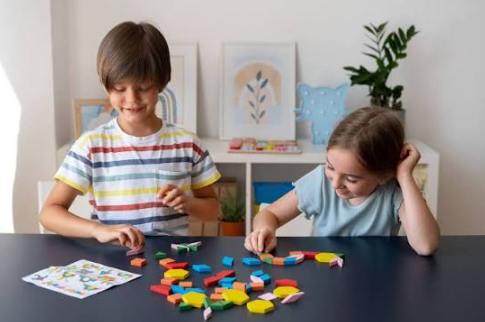
Children often learn by doing. A construction set allows them to build, adjust, and rebuild structures. A matching game encourages them to compare shapes or pictures. A puzzle asks them to consider different possibilities before selecting a solution.
These activities can create opportunities to practise observation, patience, sequencing, and problem-solving. However, every child develops at a different pace, and no individual toy guarantees a particular educational outcome. The main goal is to provide an enjoyable activity that encourages exploration.
Active play also gives adults a natural opportunity to participate. A parent might ask a child how a structure could be made stronger or invite them to explain how they solved a puzzle. Such conversations encourage children to describe their ideas without turning play into a formal lesson.
Select Toys According to Age and Interests
Age recommendations are a useful starting point, particularly when safety is involved. Younger children generally need toys with appropriately sized components and simple instructions. Older children may enjoy more complex puzzles, construction challenges, strategy games, or creative projects.
Interests are equally important. A child who likes vehicles may enjoy building sets, while a child who enjoys patterns may prefer matching games or logic puzzles. Choosing a toy that connects with an existing interest can help maintain engagement.
The level of difficulty should also be considered. A challenge that is too easy may become repetitive, while one that is too difficult can discourage participation. Look for toys that allow the child to begin simply and gradually explore more advanced activities.
The Role of Interactive Features
Some toys respond to a child’s actions through sounds, lights, movement, buttons, or digital feedback. These features can make an activity more engaging when they support the main purpose of the toy.
For example, a game may indicate when a puzzle piece has been placed correctly, while an electronic activity may introduce different stages as the player progresses. Nevertheless, additional features do not automatically improve the experience. Buyers should consider whether the child will actively solve problems or mostly watch the toy perform.
Families exploring interactive educational toys can compare different product categories and identify options that suit their children’s interests. Reading product descriptions carefully helps clarify the activities included and the age group for which a toy is intended.
Safety and Construction Quality
Safety should always come before educational features. Review the recommended age range, small-parts warnings, material information, and any special operating instructions. For battery-powered toys, check how the battery compartment is secured and follow the manufacturer’s guidance.
Inspect the product for sharp edges, loose parts, weak connections, or damage. Toys used by several children should be easy to clean and durable enough for repeated handling.
For electronic products, clear instructions and reliable controls are particularly useful. Parents should understand how to operate the toy and supervise children when the manufacturer’s instructions recommend adult assistance.
Encouraging Creativity and Social Interaction
Not all learning toys need a fixed answer or a single correct method. Building materials, pretend-play sets, and creative kits can allow children to invent their own activities. This flexibility gives them room to test ideas and develop stories.
Group games can introduce turn-taking, cooperation, and communication. Children might work together to complete a puzzle or build a shared structure. Adults can support these activities by helping resolve disagreements and encouraging children to explain their ideas.
Independent play is valuable too. Giving children time to explore a toy without constant instructions can help them develop confidence in making decisions.
Consider Value Before Buying
A toy’s price should be evaluated alongside durability, versatility, and expected frequency of use. A product with several meaningful activities may offer better long-term value than one that provides only a brief novelty.
Retailers and bulk buyers should also consider packaging, product consistency, shipping costs, minimum order quantities, and after-sales support. Requesting samples before a large order can help verify the quality and presentation of a product.
Conclusion
Educational toys are most useful when they encourage active participation, suit the child’s abilities, and remain safe for the intended age group. Puzzles, building sets, interactive games, and creative activities can all contribute to a varied play environment.
By prioritizing meaningful play over unnecessary features, families and educators can choose products that make exploration enjoyable while supporting a balanced childhood routine.