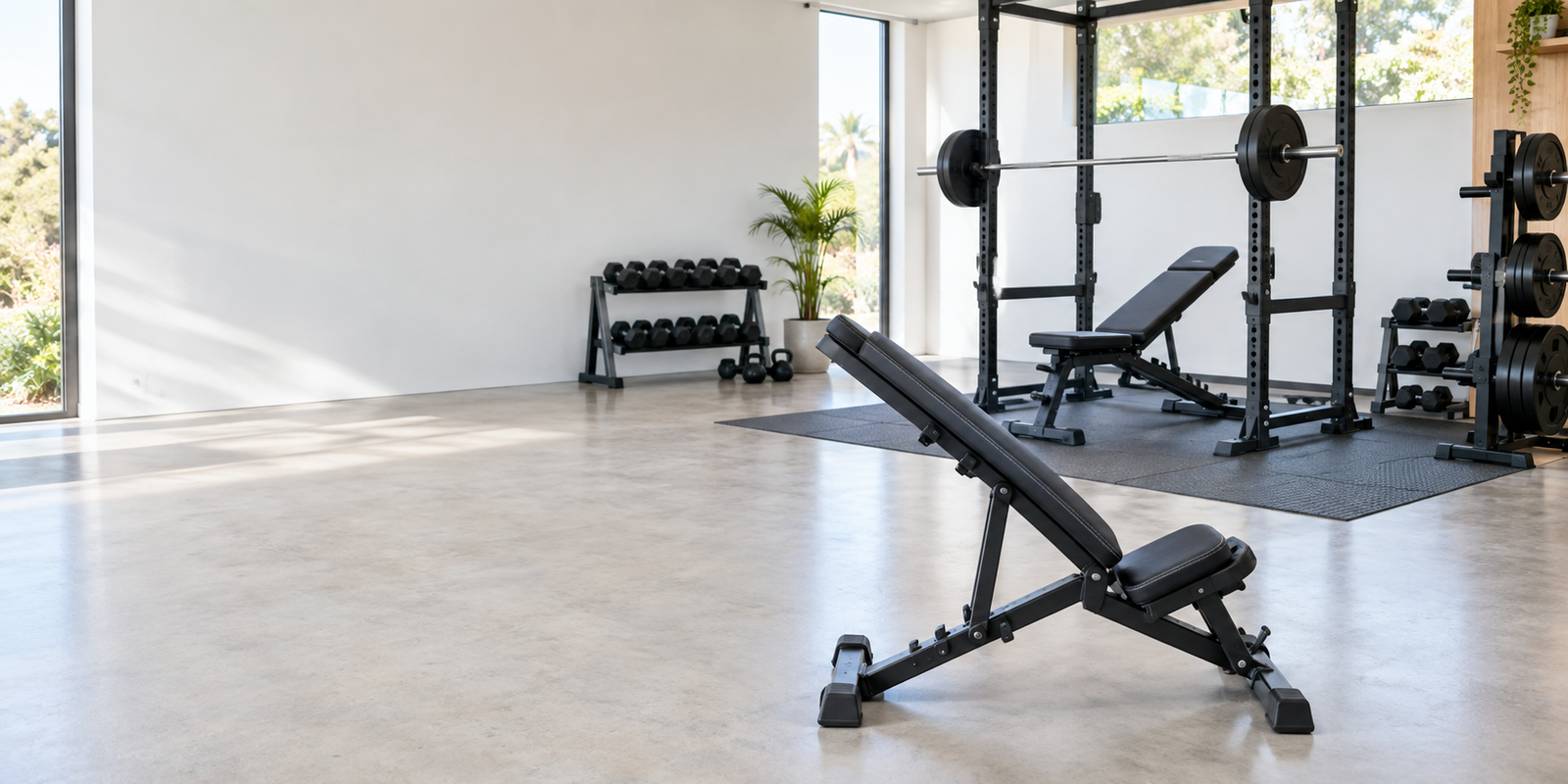
Critical Weight Bench Setup Mistakes Stunting Your Muscle Growth
Most people wheel a bench into whatever open floor space they’ve got and start lifting. It works, until your shoulder starts nagging you or your bench numbers stall for no obvious reason. By then you’ve usually been lifting on a bad setup for weeks without noticing. A seat that’s an inch too high, a pad that doesn’t fit your back, an angle you eyeballed instead of measured; none of it feels wrong in the moment. It just quietly moves the work to muscles you didn’t mean to target. Fixing setup takes two minutes. Ignoring it can cost months.
Why Weight Bench Setup Matters for Muscle Growth
How you set up a bench after you buy weight bench online dictates nearly everything that transpires within the set. Stability impacts how well you can create force; a bench that moves or wobbles while loaded makes your body work harder to stabilize the moving parts, stealing attention and energy away from the muscles that you’re trying to target. The mechanics of the exercise itself change with positioning; the same movement executed at the wrong angle or in an undesirable position loads a part of your musculature that you do not desire, diminishing stimulus where desired and increasing stress where it is inappropriate. With an improper arrangement, it has become more difficult to keep track of progress. The only way to know if the increased weight was simply due to natural strength gain or not is this: you need to ensure that variables like bench height, angle, and foot position are constant each session. A good setup is part of training, and consistent training is what elicits growth.
7 Weight Bench Setup Mistakes That Can Limit Your Progress
Most of these mistakes are easy to miss because they don’t feel obviously wrong when you’re doing them. A bench that’s slightly too high still lets you lift. An angle that’s slightly off still produces a pump. But over weeks and months, these small errors add friction to your progress that shouldn’t be there. Here’s what to watch for when setting up your weight benches.
1. Choosing the Wrong Bench Height or Position
Bench height affects foot position, and foot position affects your ability to drive through the floor during a press. If the bench is too high for your height, your feet can’t stay flat, and that floating foot position reduces the stability of the entire lift. When you buy a weight bench online, checking the seat height specification against your own measurements is one of the most practical things you can do before ordering.
2. Using an Incline or Decline Angle That Doesn’t Match the Exercise
An FID bench gives you multiple angles, which is genuinely useful, but only if each angle is set correctly for the specific exercise. A 30-degree incline emphasizes the upper chest differently than a 45-degree position does, and using the wrong setting means the load is distributed differently than you intend, so check the angle before every set.
3. Setting the Bench Too Narrow or Too Wide for Your Body
Pad width affects how stable you feel during pressing movements. A pad that’s too narrow makes it harder to keep your shoulder blades retracted and stable; one that’s too wide can force your arms into an awkward position that creates unnecessary shoulder stress. Most weight bench online product listings include pad width that suits most adults, but checking this against your own build before purchasing is worth doing.
4. Failing to Establish a Stable Base
Before any set, check that the bench isn’t rocking, that all four feet are making even contact with the floor, and that any adjustable components are locked. Even a small amount of movement under load is a problem. If the bench sits on rubber flooring, confirm that the feet are seated properly and not at an angle.
5. Ignoring the Bench’s Weight Capacity
Manufacturer weight ratings typically cover body weight plus training load combined. A bench rated to 150kg with a 90kg lifter pressing 80kg is already at its limit, and most people don’t factor both numbers in when reading specifications. Exceeding the rated capacity affects the structural integrity of the bench over time and introduces real safety risk.
6. Using a Bench That Doesn’t Support Your Full Range of Motion
A bench that’s too short won’t support your upper back through the full range of a press. One with padding that’s too firm or too soft can change the position of your shoulder blades and affect how the movement feels at the bottom. The pad needs to be long enough for your torso and firm enough to hold your position without compressing unpredictably under load.
7. Setting Up for the Weight Instead of Setting Up for the Exercise
This is the most common mistake and the hardest to notice. When the focus shifts to how much is on the bar, setup details start to feel like minor inconveniences rather than performance variables. Foot placement gets sloppy. The angle doesn’t quite get adjusted. The bench doesn’t get checked for stability. The weight goes up, but the technique gradually drifts. Treat setup as part of the set, not as a preamble to it.
Weight Bench Setup Checklist
When you are setting up your fitness equipment Melbourne, run through this before each session. It takes under a minute and removes the small setup errors that accumulate over time.
| Check | What to Look For |
| Stability | Bench remains stable during movement, no rocking or shifting |
| Angle | Adjustment matches the specific exercise being performed |
| Capacity | Body weight plus training load stays within the bench’s rated limit |
| Position | Bench is correctly aligned with the rack or equipment in use |
| Support | Pad supports the full length of your torso and maintains position |
| Clearance | Enough space around the bench for the complete movement |
| Locking | All adjustable components are fully secured before loading |
Conclusion
Getting the setup right is straightforward once you know what to check. A bench that’s stable, correctly adjusted, and matched to your body dimensions removes the friction that quietly limits progress and makes every rep count for more than it would with a sloppy setup. Thus, to actually see any progress using a weight bench, it is essential that you pay close attention to making sure you are not making these mistakes.